Albert Cummings News
Albert Cummings to Release Tom Hambridge-Produced Album ‘Strong’
Blues Blast Magazine: Albert Cummings – Ten | Album Review
“If You Want to Be a Creator, You’ve Got to Go On a Whole Different Journey”: Albert Cummings Talks Blues
Rock & Blues Muse: Interview with Albert Cummings
https://www.rockandbluesmuse.com/2022/03/30/interview-with-albert-cummings/
Blues Rock Artist Albert Cummings Inks Deal With Provogue Records
The Blues Imprint of Mascot Label Group
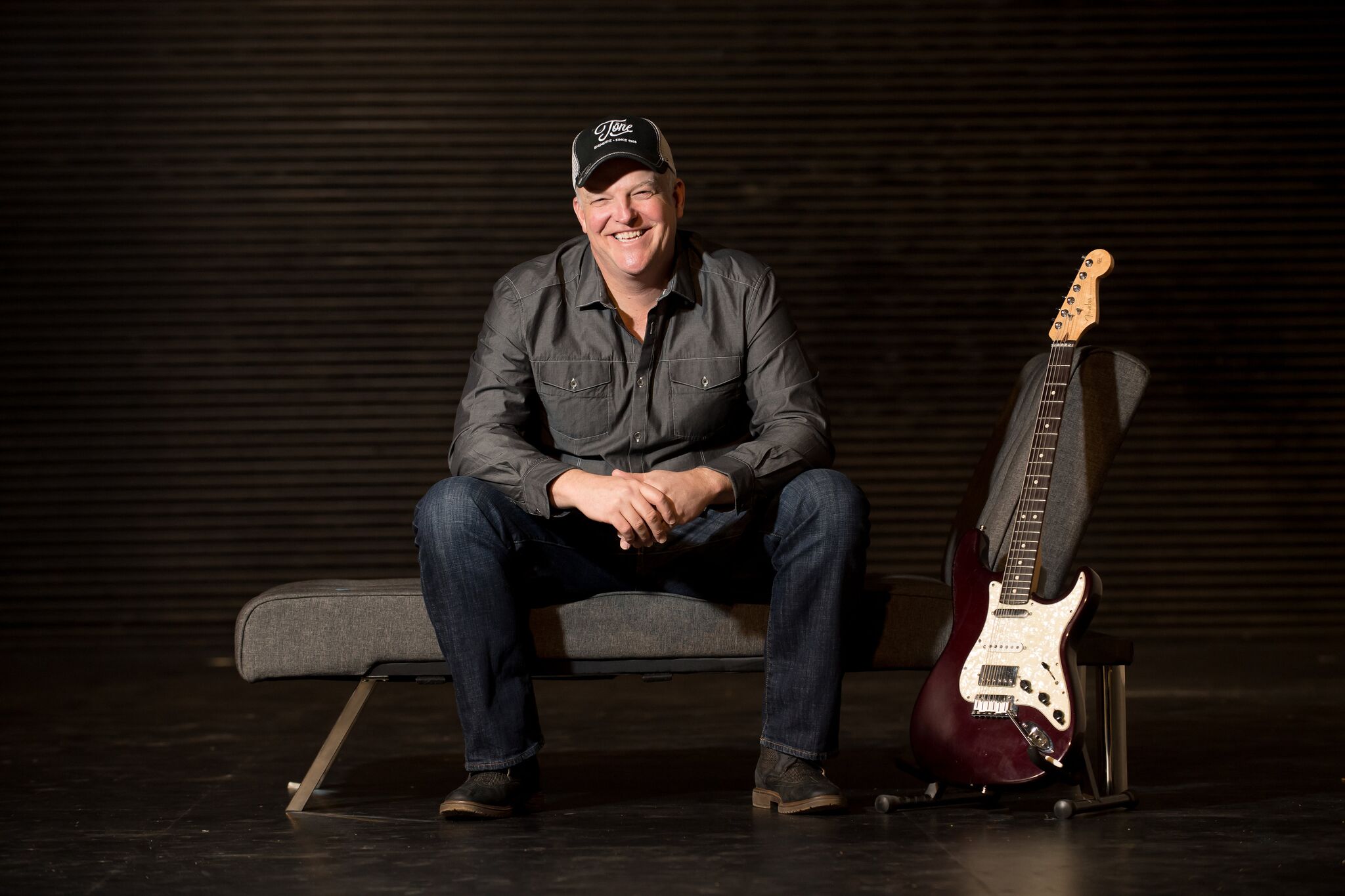

(Nashville, TENN. – August 16, 2019) – Sought after Blues Rock guitarist Albert Cummings finds a label home with Mascot Label Group imprint, Provogue Records. Mascot is known for being a market leader in the world of Blues, Rock and Metal with Provogue heading up the Blues sector working with guitar-driven artists like Robert Randolph & the Family Band, Walter Trout, Joe Bonamassa, Eric Gales and now Albert Cummings.
Mascot Label Group President, North America, Ron Burman, commented, “Albert is an exceptional guitar player who is passionate with an incredibly strong work ethic. We are happy to have him become a part of our Mascot family.”
With plans to release a new album early next year, Cummings is elated with Provogue’s support,” It’s such an honor to be part of a label that has helped shape the careers of the greatest guitar players our world has ever known,” Cummings says, “I’m confident that Provogue is the right home for me and I look forward to working with them and getting some new music to the loyal supporters that I have.”
Known for his charismatic and energetic live show, Cummings has shared the bill with music legends B.B. King, Buddy Guy, Double Trouble, Susan Tedeschi, Johnny Winter, and Sheryl Crow among many others. The prowess behind his live performance led to the release of his second live album Live at the ’62 Center, in late 2017. Recorded in his hometown of Williamstown, Massachusetts, Live at the ’62 Center showcases impeccable artistry through the album’s spontaneity and creative spirit, earning him the prestigious nomination for a Blues Music Award in the Blues Rock Album category.
Cummings grew up playing five string banjo and listening to bluegrass in Massachusetts—until the day he saw Stevie Ray Vaughan perform in 1987. That is when he was bitten by the blues-rock bug and turned to play guitar for good. Cummings has provided some of the most powerful blues music of the 21st century since the release of his debut album From the Heart (2003), produced by Double Trouble (Stevie Ray Vaughan’s rhythm section). The promising guitarist went on to work with multi-platinum producer and engineer, Jim Gaines (Stevie Ray Vaughan, Carlos Santana, Huey Lewis and the News’) to release True to Yourself (2004) and Working Man (2006) further solidifying his style of music and guitar proficiency with Billboard complimenting his work saying, “This recording is the calling card of a star who has arrived.” Cummings’ first live album Feel So Good, followed in 2008, receiving praise from Music Connection, hailing it, “one of the best live albums recorded in a long time.” In 2012, Cummings released his No Regrets album, which debuted at No. 1 in the U.S., Canada, and France on the iTunes Blues Charts and in 2015, he recorded Someone Like You with Grammy-winning producer David Z. (Buddy Guy, Prince, Jonny Lang, Gov’t Mule).
Albert continues to tour and take his unforgettable show on the road. For the complete list of dates, and more information on Albert Cummings, visit https://albertcummings.com/tour-dates/
Blues Blast Magazine Featured Blues Interview – Albert Cummings
Featured Blues Interview – Albert Cummings
|
Although in this case, in the search for a guitarist’s ‘Holy Grail’ of tone, maybe it’s hard to HEAR the forest because of all the trees. Massachusetts-based guitarist, singer, songwriter and bandleader Albert Cummings can testify to as much. “One of the first amps I ever had was this tweed (Fender) Blues Deville – this was back before I was endorsed by Fender. Mesa Boogie made this beautiful combo amp that I could have custom made, with the leather I wanted on it and set up the way I wanted it to be … just everything I wanted. So I went and bought this hugely-expensive amp and when I made the deal, I agreed to trade in my Blues Deville. I go to the store and as I’m wheeling out my new amp, low-and-behold, I hear the tone that I want to achieve coming from out of the store,” Cummings said. “So I stop rolling my new amp out and I ask the clerk what the amp that’s playing right now is? That’s the tone I want. The guy laughs and says, ‘That’s the amp you just traded in.” And the moral of that little tale is? “It’s not the amp, it’s the person playing it … it’s all about the player. I don’t care who you are, 90-percent of your tone comes out of your hands. Guys will spend thousands of dollars on pedals and amps and all of this and all of that, but the bottom line is, if you plug Stevie Ray Vaughan into an amp made at K-Mart, he’s sound like Stevie Ray. That’s where it all falls. All that gear and all that stuff is important, but it’s not the majority,” he said. “You’ll always be ahead of the game if you just start studying how hard you pick and where your hand is from the bridge to the neck and you can change your tone by moving a quarter of an inch. It’s fascinating in guitar playing how the littlest things make the biggest difference. There’s no instant cure for any of it.” Since the beginning of the New Millennium, Cummings has been leaving behind him a trail of scorched bandstands, transplanting his unique tone into the ear canals of those craving passionate, soulful blues-based songs served up with a hearty helping of blast-furnace rock-n-roll. Cummings’ ascent has largely remained on an upward trajectory, but in what can most charitably be described as a terrible case of timing, his last album – Someone Like You – came out in late July of last year, roughly around the same time that the label it was on – Blind Pig Records – was swimming through a sea of uncertainty. There were plenty of rumors and talk surrounding the stability and ultimate survival of the near 40-year old label at the time, all of which came to a head with The Orchard’s acquisition of Blind Pig’s back catalog. The resulting effect of all of that on Someone Like You (his fourth release for Blind Pig, starting with 2004′s True To Yourself) was the equivalent of a pebble being dropped through a crack in the pavement for Cummings. “Yeah, that basically killed any chance the album had. I thought it was probably my best album as far as representing my own personal music. It’s just Albert’s music and that’s what I try and put out,” he said. “I was Blind Pig’s current leading sales guy and even though I had vowed not to do another alum with them, I got to talking with the guys and finally decided I would do another one with them; I knew them and thought everything would be fine. As soon as I signed the deal, I found out a couple of weeks later they were selling the label. The Orchard is a distributor, but it’s kind of a digital, online type of distributor, run by young people. If you’ve been in the blues, you know that the majority of blues fans probably don’t even have a Facebook account, you know what I mean? Physical product is still key in the world of the blues. Right away, I thought it was going to be trouble and of course, the first thing The Orchard did was let the radio person go at Blind Pig and they let Debra – the press contact – go. I did one interview for that record; one. It was the worst release I’ve had in my entire career.”
“Well, in the music business, there’s always something that knocks you back, you know what I mean? Only the strong survive in this world,” he said. “But, that doesn’t really frustrate me; I’m in it for the long haul. I play my music because I love to play my music and nobody can take that away from me. You win a few and you lose a lot of them, but hopefully the ones you win are big enough to cancel the others out. I can only hope that people can find something in this life that makes them get up and smile in the morning and do what they love. My thing is my music.” Even casual blues fan know of the late, great Stevie Ray Vaughan’s rhythm section – Tommy Shannon and Chris Layton – better known as Double Trouble. They may also be familiar with the fact that the duo backed Cummings up on what was basically his debut release – 2003′s From The Heart. What they may not know, however, is that Shannon and Layton also teamed up and produced the disc. That had to be pretty heady stuff for a guitarist who was just trying to make himself known outside his New England-area stomping grounds at that time. “They were first, my idols, and then they became my friends and then my producers. They were really the guys that gave me my first shot at playing. Talk about guys that had been around a guitarist. I mean, I learned a lot from those guys,” Cummings said. “My first real album was with those guys in Austin, Texas … every day was a class and session. Those guys gave me my biggest boost, as far as musicianship and approach and everything that goes along with it. I’m still referencing things those guys told me 15, 20 years later. Stevie was the luckiest guy in the world, if you think about it. I mean, can you imagine being able to hang out with Albert King, Albert Collins, B.B. King? Because of Jimmie (Vaughan), they’d get to hang out and play with all those guys when they went through Austin. Double Trouble was all part of that, too, and I was so lucky to just be able to get those thoughts injected into my head. They’re so amazing.” Cummings has also spent quality studio time with a couple of producers who are well known in the industry for their ability to work with accomplished guitarists – Jim Gaines and David Z. “When you put a CD into your player, you can almost hear if it’s a Jim Gaines CD, because of its strength. Jim is so strong and his mixes are so strong. You know, he did Stevie’s In Step and that’s not really even his claim to fame. He’s done Huey Lewis and George Thorogood and Buddy Guy and Carlos Santana … all those dudes. I was on Cloud Nine … going to Memphis to work with Jim Gaines. I never thought I’d have the chance to work with him. But I never thought I’d have ever had the chance to work with Double Trouble, either. Jim is the sweetest guy in the world, but make no mistake – he’s the Alpha Male. He will push you and prod you, while also patting you on the back and being your best friend. I love that guy; he taught me so much,” said Cummings. Gaines was at the helm of three of Cummings’ albums – starting with 2004′s True To Yourself and stretching through 2012′s No Regrets. For Someone Like You, Cummings felt the need to switch things up a bit. He did so by heading to California to work with David Z.
On day number three- that foursome of musicians expanded to five, when Jimmy Vivino stopped by to lay some guitar down. “He lived like a mile down the street from where we were recording and had contacted me before and asked if I minded if he stopped by and played on a song. I was like, ‘Mind? Jimmy Vivino? Yeah.’ So he stopped by and he gelled right in. It was just one more guy to show me up, because the intelligence of those guys … I mean, they’re so educated. All I can do is play what I feel. That’s all I have,” Cummings said. Modesty aside, just by slipping any of Cummings’ discs into a player, it’s readily apparent that what the man has is one Hell of a talent for playing the guitar. His playing is white-hot and sharper than razor-wire, but it’s never fashioned with a duty of seeing how many notes he can cram into a single passage. It’s expressive, straight-from-the-heart and leaves no doubt as to why he’s been called a guitarist’s-guitarist b everyone from B.B. King to Johnny Winter and Buddy Guy. But Cummings’ hands are also comfortable wrapped around wood other than that found in the neck of his guitar. He’s also a master carpenter and has been highly sought after for that skill for years, as well. “I’ve won eight national awards for building things and I’ve built some of the most incredible homes that have ever been built. I’m a fourth-generation builder; it’s in my blood. I even went to a construction school in Boston (Wentworth Institute of Technology),” he said. “I love to create music that’s not been created before and that’s the same way with building. That’s why I get all these big projects and houses and things. I get people that are too afraid to even try and build some of these things and these architects would come to me to create this stuff. Music and building are alike in that regard; you’ve got to have a desire to make something that’s not there.” He’s been involved in carpentry and building projects far longer than he’s been playing the blues. Fact is, Cummings really didn’t come onto the radar screen of most blues fans until he was nearly 30 years old. Instead of his relatively late start at becoming a musician hindering Cummings, it seems to have instead been like an ace in the hole. “People have said, ‘Man, you should have done this when you were 18.’ I look at them and say, ‘There’s no way in Hell I could have done this at 18 or 20. No way.’ For me to be honest about my feelings and to be on stage and play, I have to know myself. I have to be happy in my own skin and all that stuff. Back when I was 18, 19, 20 … 25 even, I had no clue who I was. There was no self-security. By me starting later, I had a whole different outlook. You know, life happens when it happens. When I got out of high school, my dad, who is a third-generation builder, was like, ‘Yeah, you’re going to be a builder; that’s what you’ll be.’ And at that time, I had no idea that I could be anything else in the world. It was like, ‘You’re going to come to work with me and be a builder.’”
“When I was 27-years-old, my wife and I go to a friend’s wedding and there’s a band up on stage from New York City. My friends encouraged me to get up there and play with them, which I did. That was my first time to play with a band,” he said. “I remember getting off the stage and that something had changed. I knew right then I’d found something that made me real happy and gave me something I had never gotten before. That night I also met another guy that lived close to my town that played guitar and we would get together once a week on Thursday nights and play together. That went on for a year-and-a-half and then we put a drummer with us and I started to book gigs and it just started growing and the next thing you know, I’m touring all over the place. That happened to me; I didn’t make that happen. I’ve always found that the greatest things in my life have always came to me without me trying to get them.” It sure didn’t take long after that for Cummings to start to leave his own personal mark on the world of the blues. But even though the genre runs to his very core, it’s not really fair to simply label Cummings as just a ‘bluesman.’ There’s more to him that that. “I’m a lover of the blues, I’m a fan of the blues and I’m deeply-rooted in it, but my music is not straight-ahead blues, even though I can play straight-ahead blues,” he said. “But you know, define straight-ahead blues? I could pick an artist and do a bunch of covers of that guy, but I don’t want to do that. I want to do my own stuff and let it come and evolve. Sometimes it comes fast and sometimes it doesn’t. I’ve got an album ready right now, but I don’t know what I want to do with it. I’ve got better stuff written now than I’ve ever had. But at this point, I don’t know if I want to put something out by myself or not … I really want a team again. I just want to let people know that I’m still out there and doing stuff and still going after it. I’m still trying my best. I play this music because I love it. You know, how do you make a million dollars in the blues? You start with three million dollars.” At this point in his career of playing music, Cummings acknowledges that chances are slim-to-none for him to instantly create a major buzz and become heralded as the ‘hot new up-and-comer’ or ‘overnight sensation.’ And the way he sees it, that’s OK. “Blues is not a young man’s game. The older I get, the better my music is. I mean, there’s a prodigy in every town and there’s always this new guy that can play all these notes and do all this stuff, but where’s the meat and potatoes? Where’s the sense of stopping what you’re doing when you hear this music?” he asked. “That’s my goal. I want to make real music. Blues to me, is an expression of your feelings. That’s whether you’re using your voice, your instrument, or both. When you’re being honest about your feelings, that’s when you’re playing the blues. Whether you’re happy or sad or whatever you are, when you can convey that with your voice or instrument, you’re playing the blues and you’re being honest. I’ve seen people sitting at my shows crying, because I’ve hit a nerve. It’s also nothing to see me crying when I’m up there and getting into things … or smiling my head off. That’s the blues and that’s honesty and my music has to be that way.” Visit Albert’s website at: albertcummings.com Blues Blast Magazine Senior Writer Terry Mullins is a journalist, author and former record store owner whose personal taste in music is the sonic equivalent of Attention Deficit Disorder. Works by the Bee Gees, Captain Beefheart, Black Sabbath, Earth, Wind & Fire and Willie Nelson share equal space with Muddy Waters, The Staples Singers and R.L. Burnside in his compact disc collection. He’s also been known to spend time hanging out on the street corners of Clarksdale, Miss., eating copious amounts of barbecued delicacies while listening to the wonderful sounds of the blues. |
 Sometimes, it really is hard to see the forest because of all the trees.
 Not one to sit around and cry over spilled milk, Cummings picked himself up, dusted off his guitar and is focused on what lies ahead, rather than dwelling upon things that went down in the recent past that he has absolutely no control over.
 “David let me pick from an ala cart menu – the best of the best – of the musicians that I wanted to use. I show up in West Hollywood and meet David for the first time and later that morning, he comes my musicians. First to walk through the door is Mike Finnigan (organ). He’s an absolute genius and is the number-one call on the west coast. Then, Reggie McBride (bass) walks in and I meet him. He’s Stevie Wonder’s bass player … hello! And then in walks Tony Braunagel (drums) who plays with Robert Cray and Taj Mahal. He’s an incredible guy and a producer, himself. So we all meet and David says, ‘Yeah, we’re going to do this album live, Albert.’ I said, “Of course, we’ll get the drums and bass and keyboard down and I’ll put the guitars and vocals on after (as he had done when working with Jim Gaines).’ He said, ‘No … you’re going to play live, too.’ I thought he was joking and didn’t think I could even pull it off, but I think I do my best when I play live. And sure enough, it was like, ‘Roll tape’ and everything just fell into place. Bang! All of a sudden, I had this band that I felt like I’d been playing with my whole life and we created this album. The coolest thing about the album is, what you hear on there is the first time those songs were ever played.”
 Cummings had been playing music since he was about 12 years old – starting out on the banjo, before later moving onto the guitar when he was around 15. It would be several years later, however, before his first ‘public jam session’ took place, and it was not held in some smoky juke joint.
Concert Review: Albert Cummings’ guitar work sizzles with red-hot blues in City Park By Susan L. …

Concert Review: Albert Cummings’ guitar work sizzles with red-hot blues in City Park
By Susan L. Pena
On still another perfect, impossibly cool evening, a big crowd gathered in City Park Friday night to hear singer/guitarist Albert Cummings and his trio in an evening of sizzling blues, presented by Berks Arts Council as part of the Bandshell Concert Series.
Cummings has credited the late blues great Stevie Ray Vaughan with inspiring him to get serious about the electric guitar, and he deserves comparison with his musical hero.
Backed by the excellent Warren Grant on drums and the equally accomplished Karl Allweier on bass, Cummings hit the stage running with a powerful sound in “Man on Your Mind.”
A big man who, in jeans and a gimme cap, looks like the home builder he is, Cummings commands the stage and has the perfect voice for singing the blues.
But it’s his guitar work that sets him apart. His solos, especially in the classic “Walkin’ Blues” by Son House, were just as expressive as the song itself: beautiful, complex, inevitable. You could almost hear the guitar say words as he gave the solos the rhythm of impassioned dialogue.
At times he made the guitar sound like a shrieking clarinet, or a growling baritone sax. In “Where Did I Go Wrong,” the guitar distinctly said, “Wow,” then spun like the devil.
His repertoire runs the gamut from old-style blues to rockabilly to boogie and rock ‘n’ roll, sliding from misery to celebration.
In “Party Right Here,” Cummings whipped the guitar into a frenzy; in the song that followed, he captured the mood of driving through the night with the radio on.
“She’s So Tired,” a narrative about a woman sitting in a bar, waiting for a man, showed empathy for the plight of women who are sick of “being second best.” And in “Tell It Like It Is” (George Davis/Lee Diamond), the catchy beat swept away the sad barroom mood.
The band gave a nod to Little Feat with “Dixie Chicken,” opening the second half in another partying mood. Grant and Allweier were given opportunities to show their virtuosity in solos in the pieces that came later in the show.
But the highlight was Cummings’ solo work on the down and dirty “Barrelhouse Blues,” the song written for him by Vaughan’s band, Double Trouble. His dazzling riffs and amazing effects – at times wielding the guitar like a chain saw – subsided into subtle, eloquent phrases. He is an artist through and through.
Guitar World’s Top 15 Blues and Roots Rock Albums of 2012

Albert Cummings No Regrets #11
http://www.guitarworld.com/guitar-worlds-top-15-blues-and-roots-rock-albums-2012#slide-4
Interview: 15 Questions with Blues Guitarist Albert Cummings | by Dave Reffett
Massachusetts-born blues guitarist Albert Cummings released his sixth album, No Regrets (Buy on iTunes), August 28 through the Ivy Music Company. The album debuted at No. 1 in the U.S., Canada and France on the iTunes Blues Charts and at No. 5 on the Billboard blues charts.
When it comes to blues guitar, Cummings is the real deal, not to mention a talented frontman and singer. He has opened for countless legendary acts, including Johnny Winter, Sheryl Crow, B.B. King and others, and even recorded with Tommy Shannon, Chris Layton and Reese Wynans, better known as Double Trouble, Stevie Ray Vaughan’s backing band.
We recently hit up Cummings with these 15 questions, covering everything from his roots, new album and what it was like to work with Double Trouble.
01. How and why did you first pick up the guitar?
y dad played guitar a bit, and there was always a guitar hanging around the house, out of its case. When it’s out of its case, it’s easy to just pick it up, even for just a minute. My dad’s guitar was always too big for me to get my hands around the neck as a kid.
When I was 12, a friend of my father’s suggested I try his five-string banjo. It was a perfect fit. The neck was small, and I took off like a rocket ship, learning all the Earl Scruggs tunes I could. As my hands started to grow, I started to mess around with the guitar.
My dad showed me the G, C and D chords, and I was hooked. Bluegrass wasn’t the most popular music in those days, so with the banjo it was hard for me to find anyone to play with. I began putting a little more time into the guitar but still mostly just learning chords and progressions. I was hooked for sure, but it would still be a long time before I really dug into the guitar.
02. Who were your main early influences?
I remember being in high school and not knowing who Eric Clapton was! I was into Hank Williams Jr. and Merle Haggard. Then I heard Stevie Ray Vaughan play. At first I was convinced he was a fake. How could anyone play a guitar like that? It was his album Texas Flood, and I would listen to it over and over.
I wasn’t sure what I was hearing, but it was the first music that reached out and grabbed me. I began to learn more and more about Stevie as I went to college in Boston. One night I saw a bus with a Les Paul and a Stratocaster painted on the outside. I read the marquee, and it was Stevie Ray Vaughan & Double Trouble. I couldn’t get any of my friends to go so I went to the show myself. Stevie came out and blew me away. I remember walking out of that show saying, “Goodbye, banjo!”
03. What was your first guitar?
It was a copy of a Gibson ES-335 that I bought at a tag sale for $13. It was a real piece of junk but it was mine. My father had an old amp and I would plug my new prized possession into that thing and crank it up every time my parents left the house. I was 14 and couldn’t play anything, but it was fun pretending. The fist real guitar I bought is still the primary guitar I play today. It was a Lace Sensor Stratocaster. I was about 24, but I still wouldn’t start playing or learning anything on it until I was 27.
04. Do you have a name for any of your guitars, like B.B. King’s Lucille?
All of my electric guitars have names. My primary guitar is “CC,” named after my wife. It’s the cheapest Strat I ever bought, but it’s the one I’ve spent the most money on. A few years back I wore out the truss rod in the neck. The Fender Custom shop made a new neck loaded with bird’s eye maple for it and I love it! Fender also made me a guitar to match my primary. I call that one “Fessler,” after Greg Fessler, who built it. That’s my No. 2 guitar.
05. What was your journey like venturing out and becoming a professional musician, playing gigs, releasing CDs, etc.? Do you feel you’ve reached your goals?
I feel as though I haven’t even begun yet. I’ve only been able to put a small percentage of my time into my music. With the release of No Regrets, I plan to change that. I have overwhelming support from people around the world. I haven’t reached my overall goals, but I’ve reached many milestones along the way.
There’s nothing easy about the music business. Chris Layton from Double Trouble put it best when he said, “Life as a rock star is great for one hour a day.” My journey is relatively new, but every day I learn something new and I keep pushing on. It’s all about gaining fans one at a time and as long as I keep moving forward I am heading towards my goals.
06. What does your new release, No Regrets, mean to you? Was it hard to balance the guitar work with finding your voice in the songs? Any favorite tracks?
No Regrets is the best album I’ve done yet. It’s the first album where I really felt comfortable in the studio. It’s very hard to capture energy when that red light is on. When I first went into the studio with Double Trouble, Tommy Shannon joked that I had “red light fever.” Every time they would hit the record button, I would tense up. Tommy helped me work through that.
I’m really happy with the songs I wrote and how they came out. I see my albums as a photograph in time of where I am with my music. I look at it very simple. I try to write the best songs I can and I try to play my guitar the best I can when I work on my albums. The more experience I get with my music, the better my material and playing becomes. So I think No Regrets is my best to date. The focus is more about the songs.
07. Tone-wise, what was your recording setup like? Amps, pedals, guitars, mics, etc.?
My setup is pretty simple. A good Fender guitar plugged into a good Fender amp. I love the Fender Vibroking amp, but it’s a little too raw. I put a Vibrolux with it and keep both amps at the same volume. The Vibrolux doesn’t have the guts the Vibroking does, but it does have a sweeter sound, so the two complement each other perfectly. I’ve been pushing for Fender to make an amp that combines these two amps because it sounds so good, but so far no takers.
In the studio I used this same setup for amps. For pedals I used a Goran Fatboy for my distortion. The only other pedal I used was my Dunlop Custom Audio Wah pedal. For guitars I used my Stratocasters. I used CC and Fessler mostly. They both have my signature Tele pickup on the neck, a Texas Special in the middle and a Pearly Gates on the bridge. With this pickup combination I can get almost any sound I want, all within reach of my right hand.
08. Any tips you can share with musicians out there? And what do you do to warm up your voice?
The main tip I would share with musicians is to be yourself because everyone else is taken. The world needs new people to bring new sounds. Don’t play or sing like someone else. Just like everyone has their own voice, everyone has their own style. It bothers me to see people trying to play things like other people. I’d rather hear the original person play or sing a song than hear someone try to play it note for note. I see a lot of musicians out there that see each other as threats or competition. If you’re being true to yourself, you don’t have any competition. Just like you can’t sound like someone else, no one can sound exactly like you. Focus on your own style and develop that to its fullest.
I try to warm up my voice by singing in the green room or outside the venue. Usually my voice isn’t warmed up until I’m about five songs into my set. I’ve never had any voice lessons, so I’m not sure what I do is right. It’s the same with guitar. I had one lesson and decided it was a total waste of time. I learned to sing in basic training in Fort Knox, Kentucky. I never knew I could sing until the drill sergeants put me out in front and said, “Sing.” All of my buddies encouraged me to pursue singing and eventually I did.
09. Which players should guitarists study and learn their licks from?
The first that comes to mind is Freddie King. He has an album called Freddie King Goes Surfing. It’s all instrumentals, and it covers every rhythm you need. I spent a lot time wood shedding on that album. Of course, you have to study Stevie, but he was so far beyond good that it is frustrating to try to learn his stuff. If you look into what inspired Stevie, you can study what he studied. I always say that Stevie opened the door to the blues for me. Once you open the door, you run into Albert King, then Freddie King, then B.B. King and Jimi Hendrix, Lightnin’ Hopkins, Albert Collins, Johnny Copeland, etc. The cool thing about Stevie is he could play exactly like every one of these guys, but then he could always be himself and you could plainly hear the difference.
10. Here’s a question from Gene in Minnesota: What type of support or lack thereof was there in your area? Was there a blues scene? Were there bars/clubs and other artists who’d help each other out?
Where I live, there’s no such thing as a blues club. You have to drive at least an hour to get to hear any good live music. When I finally started playing gigs I immediately went to Albany, New York, to play. I developed my following there and then was able to use that to help grow my career. When I first started playing, I got to know a small group of musicians. My experience was that musicians very rarely helped musicians. I saw too much of the ego thing, and that helped me to develop my own style even more.
11. Where’d you get the idea to cover “Rock and Roll” by Led Zeppelin on your live CD?
We did that song just one time at a gig before the live album. It went over really well with the crowd. On the night of the live recording, I nodded to the drummer to start “Rock and Roll” after “Blues Makes Me feel So Good” and he looked at me like, “Are you sure?” I nodded yes and off we went. I get tons of requests to do that again and sometimes we’ll throw it in when it feels right.
The idea didn’t come from anywhere except I tend to play my sets based on what is fresh in my head. I don’t use a set list. I believe if you’re thinking, you’re stinking. If I’m traveling to a gig and I hear a song I like, I might try it out later that night. I like being on the edge and keeping it very spontaneous. It keeps the band alert for sure!
12. Any plans to cut a new live CD?
With the recent release of No Regrets, I don’t have any immediate plans for any new albums. I would love to do a live DVD/CD, but I’m not sure if I’ll do that on the next album. We’ll see how things go.
13. Where do you find your inspiration for song ideas?
All of my songs come from my life experiences. I try to write about what I know as much as I can. This makes it easier for me to be real about my music. Sometimes I write something out of the realm like “Checkered Flag” on “No Regrets.” That’s a song I wrote as if I were a NASCAR driver. I’m not sure where the idea came from as I’ve never driven a race car, but once I get an idea, I can usually put a song around it very quickly. At times I can go forever without having an idea. It gets very frustrating, but then I’ll hear someone say something or I’ll think about something and all of a sudden I have a new song.
14. Was it intimidating working with Double Trouble?
Imagine this. You’re a beginning guitar player from a town that doesn’t even know what blues is, and all of a sudden you’re in Austin, Texas, with Chris Layton, Tommy Shannon and Reese Wynans looking through the glass at you while you’re in a studio for the first time. Intimidating? That’s an understatement! I was so scared, I couldn’t even think.
They kept asking me, “Who did you listen to, who do you like?” I would say, “The only thing I ever listened to is you guys.” It was the first time the entire band was recording a full album with an artist since Stevie had passed away, so it even put more pressure on me in my own mind. I spent 19 days with those guys and it was the best education I could have ever received.
They eventually made me feel at ease and taught me so many things that I never even knew existed. One night when I was having a hard time figuring out how I wanted to play a song, I asked Tommy, “What do you think Stevie would tell me to do?” and he said, “He’d tell you to play from the heart.” I eventually named that album From the Heart. That night Tommy left for a while and came back with a wonderful surprise. He brought in pictures of Stevie before he had made it, and he brought in Stevie’s hat and some candles. He set them up around me and told me to just relax and play my guitar.
After the experience of working with those guys, I’ve always said it doesn’t matter who I play with or where I play with them, I will never feel intimidated again. It was such a valuable experience! I’m so grateful for it!
15. Where’s the best place people can find more information about you?
Visit albertcummings.com. Of course, people can find me on Facebook here.
Albert Cummings Instructional Guitar DVD
| Albert Cummings – Working Man Blues Guitar |
| http://www.halleonard.com/product/viewproduct.do?itemid=320875&lid=0&keywords=albert%20cummings&subsiteid=1&
|
| Genuine Electric Blues Guitar Techniques, Tips, and Concepts |
| Series: Instructional/Guitar/DVD |
| Format: DVD – TAB |
| Artist: Albert Cummings |
| Join blues guitar master Albert Cummings in this intimate instructional DVD featuring on-screen tablature and tons of great advice on learning and living blues guitar. From basic guitar licks and right-hand techniques to informative tips on the art of creating music, Albert shares with you his years of experience and passion for the blues. 1 hour, 5 minutes. |